
Call 214-506-0671

Marriage Fraud and USCIS: Why Your Attorney Matters
Why USCIS Is Cracking Down on Marriage Fraud
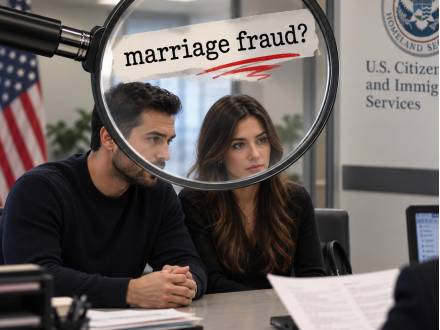
USCIS enforcement efforts against marriage fraud have escalated dramatically. In 2026 alone, the Department of Justice and USCIS have dismantled multiple nationwide marriage fraud rings involving thousands of fraudulent cases. Most recently, 11 defendants were indicted in a decade-long marriage fraud conspiracy that operated across multiple states. These high-profile takedowns signal one thing: USCIS is dedicating significant resources to identifying and prosecuting sham marriages.
This matters to you because heightened enforcement means USCIS officers are applying stricter scrutiny to all marriage-based petitions, not just the obvious ones. If your case involves a spousal petition, you need to understand what triggers investigation and how to defend a legitimate marriage.
The Reality Behind the Crackdown
Marriage fraud undermines the integrity of family-based immigration. Unlike employment-based cases or diversity visas, family-based petitions depend entirely on proving a genuine relationship. When USCIS identifies patterns of fraud, they don't just penalize individual cases. They flag entire networks, interview petitioners separately, and sometimes refer cases for criminal prosecution.
The scale is substantial. Some dismantled operations involved hundreds of marriages and coordinated networks of fraudsters charging thousands of dollars per arrangement. This volume has forced USCIS to develop sophisticated detection methods and train officers specifically in identifying inconsistencies that legitimate couples would never exhibit.
Red Flags That Trigger USCIS Investigation
USCIS officers use established red flag indicators to identify marriages worth investigating. Understanding these is critical because a legitimate marriage can appear suspicious if you're not prepared for the scrutiny.
Relational Red Flags
USCIS investigates when:
- The couple has minimal shared history before marriage (less than a few months of dating or communication)
- There is a significant age gap combined with other factors (though age differences alone are not disqualifying)
- The couple has little to no shared social circle or mutual friends
- They met only once or twice before deciding to marry
- There is limited documented communication before marriage (text messages, emails, photos, social media interaction)
- Language barriers prevent genuine conversation between spouses
Why this matters for legitimate couples: If you met quickly, online, or from different countries, you can prepare evidence showing genuine connection. Communication records, travel receipts showing visits, photos together, and testimony from people who witnessed your relationship are essential.
Financial Red Flags
USCIS looks for:
- No joint financial accounts or assets
- Separate housing despite claims of cohabitation
- Disparity in financial resources with no explanation
- Recent large financial transfers to the immigrant spouse
- Employment or income that doesn't align with lifestyle
- Refusal to provide financial documentation
Why this matters for legitimate couples: Immediately open joint accounts. If you maintain separate finances for personal reasons, document it. Legitimate couples often keep some separate accounts while also showing joint commitments. Show beneficiary designations on insurance policies, wills, or retirement accounts.
Immigration-Specific Red Flags
USCIS officers watch for:
- Immigrant spouse has multiple prior petitions from different petitioners
- Petitioner has multiple spousal petitions pending simultaneously
- The marriage occurs right before employment authorization or another immigration benefit expires
- Immigration benefits appear to be the primary driver of the marriage timeline
- The immigrant spouse cannot articulate basic facts about the petitioner's family, history, or daily life
Why this matters for legitimate couples: Be prepared to answer questions about your spouse's family members, childhood, work history, and daily routine. These aren't trick questions. USCIS is listening for genuine knowledge, not rehearsed answers.
Real-World Examples: Legitimate vs. Fraudulent Patterns
Example 1: The Online International Match
Fraudulent pattern: Petitioner (US citizen) meets immigrant through a dating site. They communicate for one month. Petitioner travels overseas for one week, proposes. Marriage occurs. Immigrant moves to US. Application filed immediately.
Why it triggers concern: Timeline is compressed, limited in-person interaction, immediate application filing after moving.
Legitimate version: Petitioner and immigrant met online through friends. They video-call regularly for six months. Petitioner visits for two weeks, meets the immigrant's family. They continue long-distance relationship for another six months. After year-long relationship, they marry. They wait another six months before filing, allowing time for cohabitation and building shared life.
How it differs: Documented communication over time, multiple visits, involvement of extended family, demonstrated commitment period after marriage, established joint life before filing.
Example 2: The Quick Marriage Before Status Expires
Fraudulent pattern: Beneficiary is on temporary visa (H-1B, L-1, F-1). Marriage occurs one month before authorized status expires. Petitioner files spousal petition immediately after marriage.
Why it triggers concern: Timing suggests the marriage was motivated by immigration need rather than genuine relationship.
Legitimate version: Couple has been dating for two years. Beneficiary's status will expire. They decide to marry and pursue permanent residence together. They married six months ago when status was stable and secure. They've been cohabiting, building joint finances, and now file the petition when ready.
How it differs: The marriage occurred when the person's immigration status was not threatened. It represents a personal milestone, not an immigration solution.
Example 3: The Beneficiary With Multiple Petitioners
Fraudulent pattern: Immigrant beneficiary has petitions pending or approved from three different US citizens. Each petitioner claims genuine relationship.
Why it triggers concern: This is a classic fraud indicator. Only one petitioner is genuine (if any).
Legitimate version: Immigrant was previously married to US citizen A (divorced or deceased). Years later, marries US citizen B. Depending on timing and whether prior petition was withdrawn, this can appear similar but is distinguishable through divorce decrees, death certificates, and documentation of genuine separate relationships.
How it differs: There is clear documentation of prior relationship dissolution. The couple can articulate why the previous marriage ended and how the new relationship developed independently.
The Role of an Immigration Attorney in Protecting Your Case
Here's what you might not realize: even legitimate marriages require strategic presentation. USCIS skepticism is not necessarily a sign of a problem with your case. It's institutional caution. An experienced immigration attorney helps by:
1. Anticipating Scrutiny
Your attorney knows what questions will be asked and what documents you'll need before USCIS asks. They prepare you to answer interview questions in ways that feel natural and genuine, not rehearsed. They also help you gather evidence you might not have thought to preserve.
Example: Did you take photos together? Have emails or text messages? Do you have plane tickets from visits? Joint lease or mortgage? Co-signed loans or credit cards? Your attorney helps compile and organize this before USCIS requests it.
2. Framing Your Timeline Appropriately
Marrying quickly is not fraud. Many legitimate couples marry after knowing each other for months rather than years. Your attorney explains your timeline in context. They show that even a quick marriage reflects genuine choice, not desperation for immigration status. They might write a narrative explaining how you met, what drew you together, and key milestones in your relationship. They do this persuasively while staying truthful.
3. Preparing You for the Interview
USCIS conducts marriage interviews specifically designed to detect fraud. Officers sometimes interview spouses separately. The questions can feel intrusive. An attorney helps you understand what's being asked, why, and how to answer clearly and honestly without over-explaining or contradicting your spouse. They also ensure you and your spouse are aligned on key facts about your relationship without coaching you into fabrication.
4. Handling Red Flags Directly
If your case has legitimate red flags (age difference, quick marriage, online meeting), your attorney doesn't hide these. They address them head-on in your filing, explaining why your relationship is genuine despite circumstances that might otherwise raise questions. This is infinitely more effective than USCIS discovering an unexplained red flag.
Example: "We met online and married after eight months of long-distance relationship. Here's why this reflects genuine connection: [evidence of regular communication, multiple visits, involvement in each other's family, joint plans for future, financial commitments made together]."
5. Protecting You From Overreach
USCIS has broad authority to investigate marriage fraud, but officers sometimes request excessive or inappropriate documentation. An attorney ensures requests stay within legal bounds and pushes back when necessary. They also protect you from inadvertently saying things that could harm your case.
What a Legitimate Couple Should Do Now
If You're Considering Marriage and Care About Immigration
- Don't rush for immigration reasons. Marry because you want to. The legal process is faster when the relationship is genuine and documented as such.
- Document your relationship from the start. Photos together, text messages, emails, social media posts, travel records. You don't need to stage these. Genuine couples naturally create this evidence.
- Build joint financial commitments. Open a joint checking or savings account. Consider joint credit cards or even a co-signed loan. These show you're planning a life together, not just an immigration transaction.
- Involve your families and friends. Attend events together, introduce your spouse to people who matter. Maintain this involvement after marriage.
If You're Already Married and Filing Now
- Gather comprehensive documentation immediately. Photos (especially from before marriage), communication records, joint financial statements, lease agreements, insurance policies, travel records, and letters from friends or family attesting to your relationship.
- Prepare a relationship narrative. A simple, honest story about how you met, what you have in common, how your relationship evolved, and your plans together. This should be 1-2 pages, not a novel.
- Consult an attorney before filing. Immigration cases involving marriage benefit enormously from attorney review. Your attorney reviews your documentation, identifies gaps, and advises on presentation. This prevents delays that could otherwise extend your case by months or years.
- Be consistent and honest in all communications. During interviews, in written statements, and in documents. Inconsistencies, even small ones, create suspicion. Honesty, even when something seems awkward, builds credibility.
The Real Cost of Proceeding Without an Attorney
Many couples attempt spousal petitions without legal representation to save money. Here's what actually happens:
- Case gets requests for additional evidence (RFE) because documents are disorganized or incomplete. This adds 3-6 months to processing.
- Couple is unprepared for the interview. They answer questions inconsistently or defensively. USCIS denies the petition for insufficient evidence of genuine relationship.
- Legitimate marriage is denied, and now the couple must appeal, restart the process, or face a permanent bars to reentry. The cost of correction vastly exceeds the original attorney fee.
In contrast, attorney-represented cases move faster. USCIS interviews couples who are prepared, confident, and truthful. Even when red flags exist, strong documentation and clear explanation lead to approval.
Bottom Line
USCIS is right to scrutinize marriage petitions. Marriage fraud is real and damages immigration integrity. But legitimate couples are not the enemy here. You need to understand what USCIS is looking for, prepare your case accordingly, and present your genuine relationship compellingly.
An immigration attorney does this for you. They know the specific red flags your case might trigger. They help you address them before USCIS asks. They prepare you for interview questions and ensure your application tells a coherent, truthful story about your relationship.
Your marriage is genuine. Make sure your case reflects that.
If you're in the Bay Area or San Francisco area navigating a spousal petition or family-based immigration case, don't face USCIS interviews unprepared. An experienced immigration attorney can make the difference between approval and denial.
Next Steps
If you're pursuing marriage-based immigration in the Bay Area, San Francisco, Concord, Dallas, or beyond, start here:
- Gather documentation of your relationship (photos, communication, financial records, travel history)
- Schedule a 30-minute consultation with an immigration attorney experienced in family-based cases
- Let your attorney review your case for potential red flags before filing
- Prepare thoroughly for your USCIS interview
At Hafey and Karim Immigration Law, we specialize in family-based immigration, spousal petitions, and marriage-based green cards. Our attorneys understand USCIS scrutiny and know how to present your genuine relationship compellingly. We have offices in the Bay Area (Concord and San Francisco) and Dallas, serving couples navigating these complex cases every day.
The investment in proper representation now prevents costly delays, denials, and the need to restart your case later. Your family-based immigration case deserves that attention.
Ready to protect your case?
Contact Hafey and Karim Immigration Law today for a 30-minute consultation. We'll review your situation, identify potential red flags in advance, and help you move forward with confidence.
Disclaimer: This article provides general information about marriage-based immigration and USCIS fraud investigations. It is not legal advice. Immigration law is complex and highly fact-specific. Consult with a qualified immigration attorney about your individual case.


Our firm provides representation for people throughout the United States. From our Concord office, we serve clients in San Francisco, Oakland, San Rafael, San Pablo, Richmond, Berkeley, Alameda, San Leandro, Hayward, Fremont, San Bruno, San Mateo, Palo Alto, San Jose, Mountain View, Milpitas, Cupertino, Santa Clara, and Campbell. Additionally, we serve clients in Texas cities including, Plano, Frisco, Allen, Carrollton, Farmers Branch, Richardson, Garland, Mesquite, Irving, Grand Prairie, Arlington, Euless, Bedford, Grapevine, Coppell, and Fort Worth.
Results listed are not a guarantee or indication of future case results.